
TIMOTHY A. CLARY / AFP via Getty Images
- The stock market is a good way to keep tabs on the latest AI developments.
- But circumstances change so quickly that it’s tough for investors to get ahead of emerging trends.
- Morgan Stanley Investment Management has taken a step back and laid out 10 essential AI truths.
For the average person, the AI trade feels basically impossible to keep up with.
It’s not just the highly technical nature of the developments — it’s the sheer volume of them. Stakes and industry goalposts shift daily. The only constant is how quickly everything moves.
For investors, the stock market is a handy guide. Share prices show in real time which winners and losers are being crowned and dethroned. But even then, where do you start?
Morgan Stanley Investment Management (MSIM) recently stepped back to answer the question, outlining what it sees as 10 key truths about AI that investors should know:
1. AI is compounding at an unprecedented pace
MSIM points out that roughly $2.3 trillion has been committed to AI capex since 2017, and that the pace is only accelerating. Consumption of tokens grew by more than 10 times in 2025 alone. At the current rate, the firm says AI systems will be 250 times more powerful by 2028.
“History offers no reliable template for compounding at this rate,” MSIM said.
2. AI bottlenecks keep moving
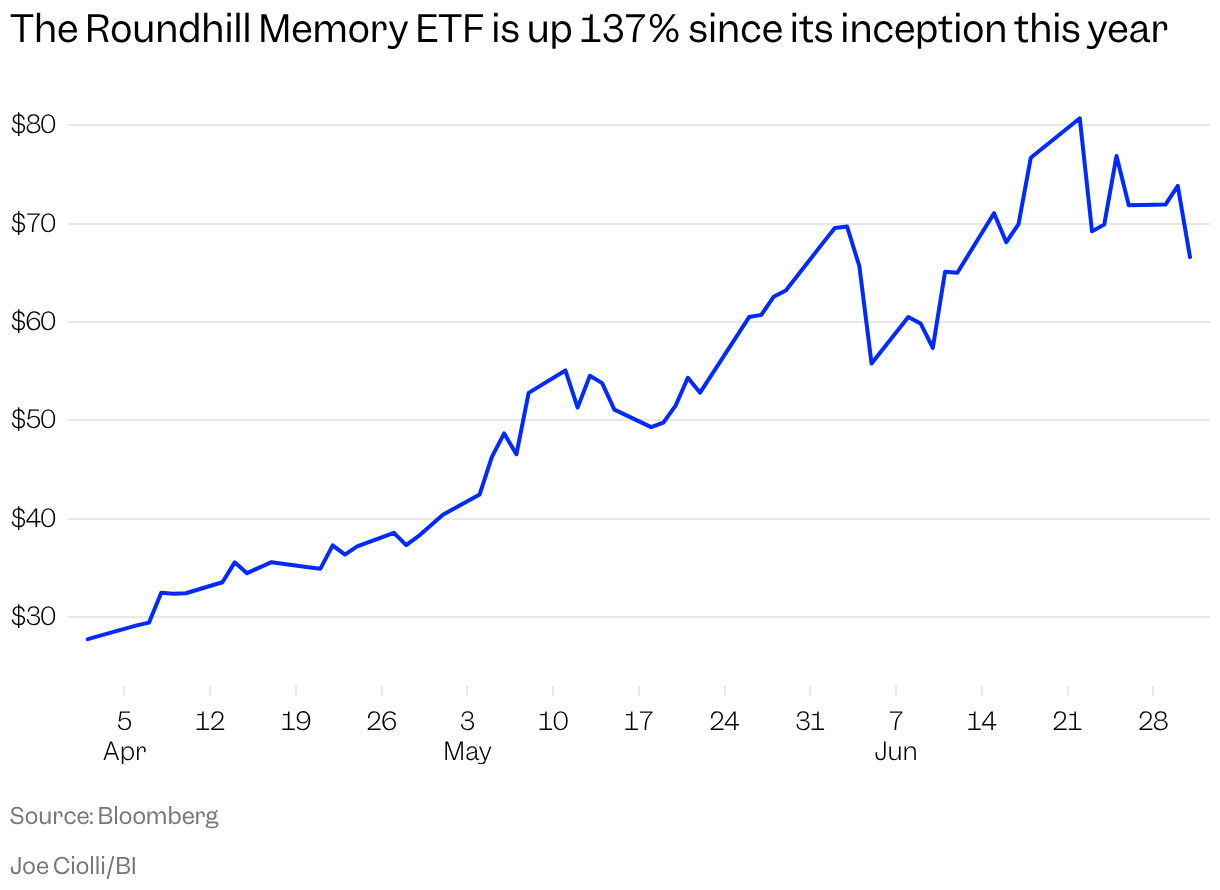
AI bottlenecks started with chips, then moved to power, memory, networking, and then cooling, quickly turning commodities into scarce assets, MSIM says.
“The semiconductor story is no longer about who makes the best chip,” MSIM said. “It is about which layer of the supply chain becomes indispensable next. For investors, identifying that layer before consensus is the opportunity.”
3. Tokens are the key product
Data centers are modern-day factories, while tokens are the output, according to MSIM.
“The $2 trillion software industry was built on licensing seats,” MSIM said. “The next chapter will be built on consuming tokens.”
4. An agentic transition is underway
MSIM says that AI is shifting from being reactive to becoming autonomous.
“It is a revolutionary restructuring of how work gets done,” the firm said.
5. There are new software moats being formed
In the vertical SaaS space, MSIM says the winners will control the three Ds: data, domain, and distribution.
“The next wave of value will come from AI usage: inference, orchestration, applications and workflows that offer more durable recurring revenue opportunities,” the firm said.
6. AI is moving into the physical world
MSIM says AI is no longer just analyzing the economy — it’s also beginning to operate it through robotics, autonomous vehicles, drones, and industrial automation.
“AI stops analyzing the economy and starts operating it,” the firm said.
7. AI is a full-stack capital cycle
AI isn’t just a software or chip story, but also a cross-sector investment theme spanning infrastructure, models, applications, robotics, and power, according to MSIM.
“AI is a cross-asset, cross-sector investment theme,” the firm said.
8. AI is becoming a geopolitical race
AI is increasingly viewed as a matter of national security, especially for the US and China.
“The race is no longer purely commercial. It is strategic,” MSIM said.
9. AI governance is falling behind
MSIM says AI capabilities are advancing faster than regulation, leaving private companies making decisions with broad economic and geopolitical consequences.
“Capabilities are advancing. Governance is not,” the firm said.
10. The big winners of AI may not exist yet
MSIM compares AI to past technology revolutions, arguing infrastructure is built first, while the biggest applications and investment winners emerge later.
“The companies that generate the greatest returns may not yet have been founded,” the firm said.